

Why Are We Still Keeping Rabbits in Hutches?
When you picture a pet rabbit, what do you see?
For many people, it’s still a rabbit sitting in a wooden hutch at the bottom of the garden.
But have you ever wondered why rabbits are kept in hutches in the first place?
The answer has very little to do with providing a happy home for a much-loved family pet.
The hutch wasn’t designed for pet rabbits
Historically, rabbits were kept primarily as a source of meat and fur rather than as companion animals.
Housing was therefore designed around the needs of the people keeping them – not around giving rabbits space to exercise, explore and behave naturally.
Keeping rabbits confined in relatively small spaces made them easier to manage, feed and breed. Raising their accommodation off the ground also helped provide protection from predators, damp and other hazards.
In that context, the traditional rabbit hutch made sense.
But our relationship with rabbits has changed enormously.
Today, rabbits are one of the UK’s most popular companion animals. We know far more about their physical, behavioural and social needs.
So why are we still housing them in something that was never designed with those needs in mind?
One of our most popular pets – but also one of the most neglected
Despite being one of the UK’s most popular pets, rabbits are also considered to be among the most neglected.
And a huge part of the problem is how they are housed.
Too many pet rabbits still spend their lives in hutches that don’t give them enough space to exercise or display their natural behaviours.
The problem is that we’ve become so accustomed to seeing rabbits in hutches that it can look completely normal. Small hutches are still readily available to buy and are often marketed as suitable rabbit homes.
But being traditional doesn’t make something suitable.
Our understanding of rabbit welfare has moved on enormously – and their housing needs to move on with it.
Rabbits need more than a hutch
Rabbits aren’t animals that naturally spend most of their lives sitting still.
They need to be able to:
- run
- hop
- stretch out fully
- stand upright
- forage
- dig
- explore
- hide when they feel frightened
- play
- interact with a compatible rabbit companion
A small traditional hutch simply doesn’t provide enough room for all of that.
And adding a small run that rabbits only have access to for a few hours doesn’t solve the problem either.
Their exercise space needs to be part of their everyday home.
The hutch shouldn’t be the home
A sheltered area can absolutely form part of good rabbit accommodation. Rabbits need somewhere dry, secure and protected from the weather where they can rest and hide.
The difference is that the sheltered area should be one part of their environment – not their entire world.
Modern rabbit housing should provide a spacious, secure living environment with permanent access between sleeping, shelter and exercise areas.
Think less “rabbit hutch” and more “rabbit home.”
Rabbit welfare has moved on – housing needs to move with it
The Rabbit Welfare Association & Fund (RWAF) campaigns for better standards of rabbit welfare and promotes accommodation that allows rabbits to live in compatible pairs and have permanent access to sufficient living and exercise space.
Yet small hutches are still widely sold and marketed as suitable homes for pet rabbits.
That’s one of the reasons we wanted to do things differently.
Our RWAF-approved rabbit housing
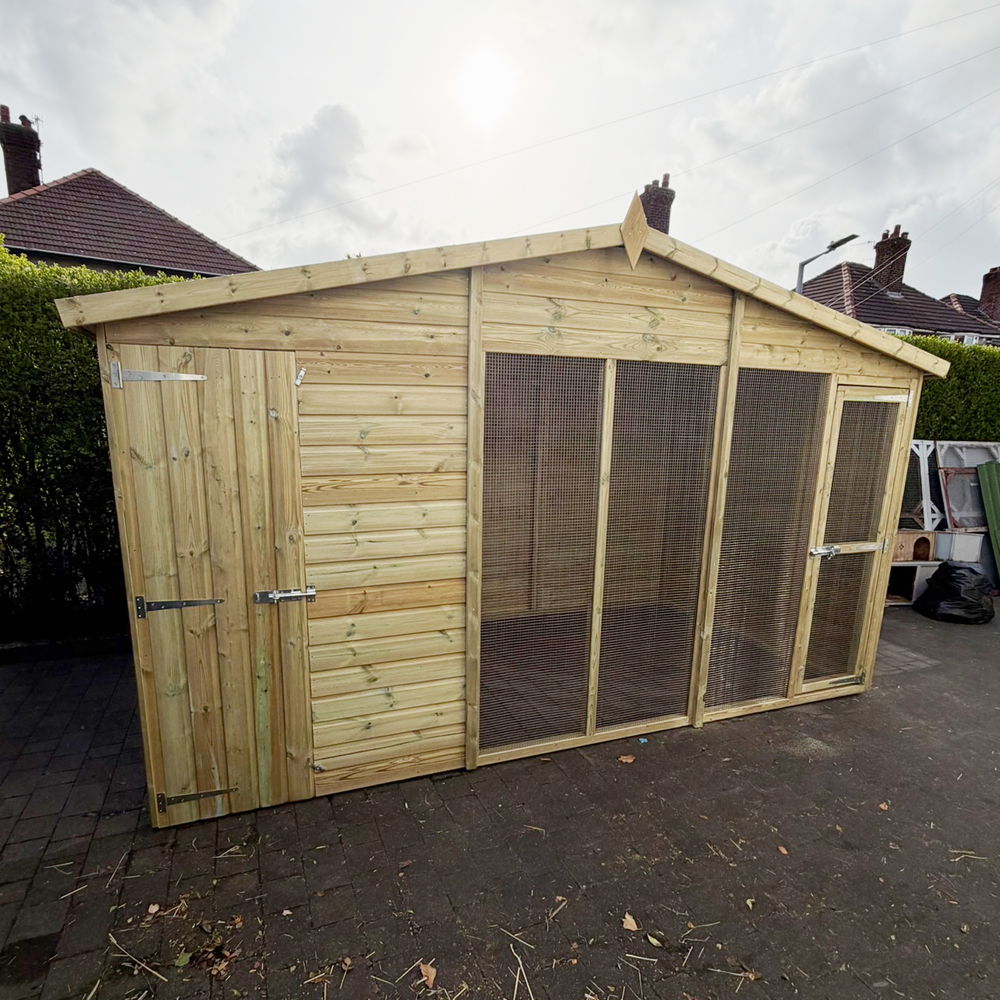
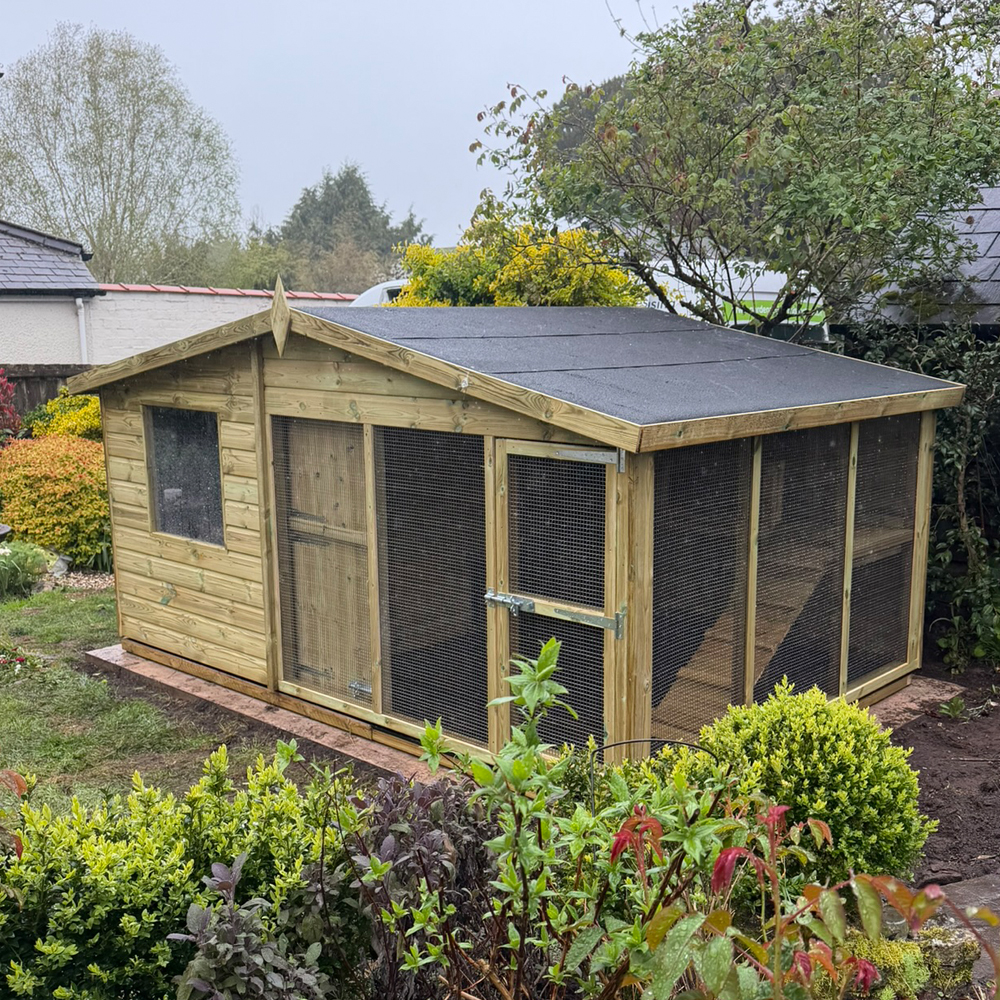
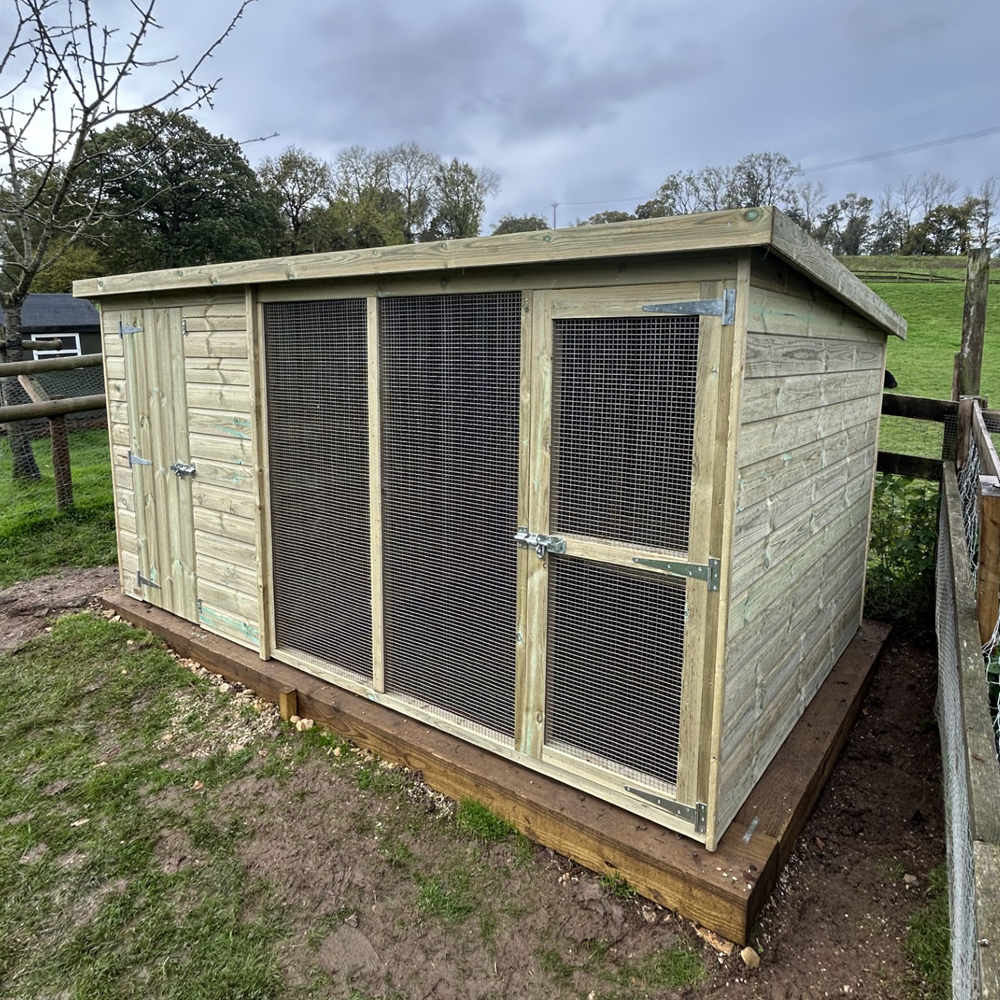
At Garden & Animal Structures, our rabbit housing range is RWAF approved and has been designed around modern rabbit welfare guidance rather than the traditional idea of a rabbit hutch.
Our housing combines a protected sleeping and shelter area with a spacious, secure exercise area, allowing rabbits to move between the different parts of their home.
Depending on the design, our rabbit housing can include features such as:
- spacious permanently accessible exercise areas
- sheltered housing areas
- ramps and internal shelves
- secure stainless-steel mesh
- wipe-clean flooring
- PVC-lined insulated housing
- weather protection
- enrichment-friendly layouts
We also manufacture our structures ourselves, meaning there are options available to suit different gardens and requirements while maintaining the welfare standards behind our approved range.


It’s time to change what a “rabbit home” looks like
The traditional rabbit hutch belongs to a very different period in our relationship with rabbits.
We no longer see rabbits simply as animals to be kept confined, fed and protected from predators. They’re intelligent, active and social animals with complex welfare needs.
Our understanding has changed.
Their homes should change too.
A hutch can provide shelter.
It shouldn’t provide their whole life.