
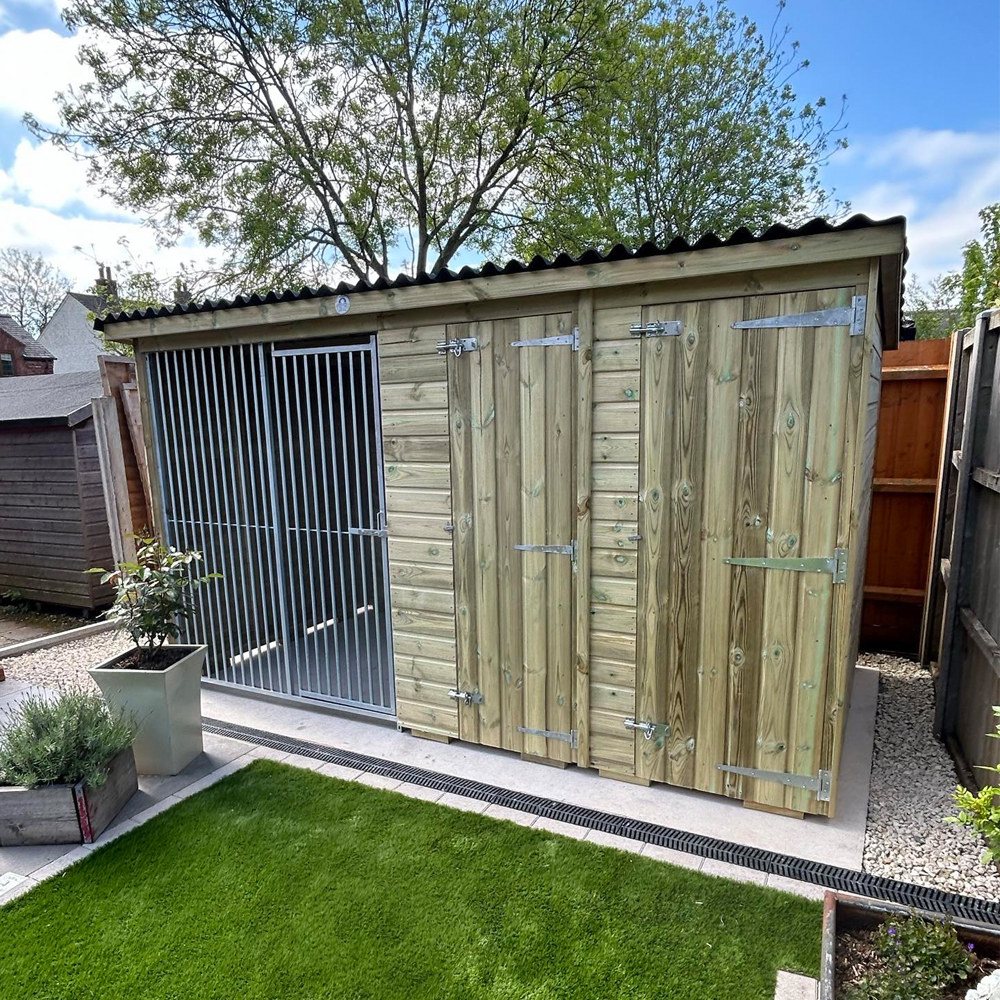
How to Keep Your Dog Warm in an Outdoor Kennel This Winter
When the snow arrives and the temperature drops below freezing, a lot of owners start to worry about dogs that live or sleep outside. The good news is that a well-built outdoor dog kennel, set up properly, can keep your dog warm, dry and comfortable all winter. Here’s how to get your kennel and run ready for the cold.
1. Start with a solid, draught-free kennel
Most heat is lost through gaps, thin walls and cold floors. Our wooden dog kennels and runs are built from tongue and groove timber on the walls, floor and roof, so there are no gaps for wind and snow to blow through. If your current kennel has gaps, splits or a leaking roof, fix them before the worst of the weather arrives.
2. Add insulation
Insulation makes a big difference on frosty nights. It keeps the warmth your dog gives off inside the sleeping area, and also keeps the kennel cooler in summer. Insulation can be added to any of our kennels, and our insulated dog cabins are a great option for dogs that spend a lot of time outside.
3. Give your dog a raised, enclosed bed
Cold rises from the ground, so a bed that sits off the floor helps a lot. A raised dog sleeping bench or a dog sleeping box gives your dog a snug, enclosed space where its body heat stays close. A smaller sleeping area warms up much faster than a large open kennel.
4. Block the wind
A draught screen inside the doorway stops wind blowing straight onto your dog’s bed. See our kennel accessories. Where possible, face the kennel door away from the prevailing wind.
5. Use the right bedding
Use plenty of dry bedding such as straw, or thick dog bedding that’s easy to wash. Check it daily and replace anything damp straight away, because wet bedding draws heat away from your dog.
6. Keep water from freezing
Water bowls freeze quickly in snow and frost. Check them at least twice a day, top up with fresh water, and consider a heavier bowl that freezes more slowly. Never let your dog go without water in cold weather.
7. Clear snow from the run
Snow can build up on the roof and in the dog run, and drifts against the mesh can make it easier for some dogs to climb out. Brush heavy snow off the roof and clear a path in the run so your dog can move around and go to the toilet comfortably. Avoid using salt or de-icers where your dog walks, as they can irritate paws.
8. Think about food and exercise
Dogs that live outside can burn more energy in winter keeping warm. Ask your vet whether your dog’s food needs adjusting. Keep walks going, but dry your dog off well before it goes back into the kennel.
9. Know when to bring your dog in
Older dogs, puppies, thin-coated or short-haired breeds and dogs with health problems feel the cold much more. In very low temperatures, or if your dog is shivering, lethargic or reluctant to move, bring it inside and speak to your vet.
Planning a new kennel before next winter?
Every kennel we sell is handmade at our workshop in Newcastle-under-Lyme, Staffordshire, and installed by our own team across the UK. Have a look at our outdoor dog kennels, dog runs and pens and kennel blocks, or contact us for a free, no-obligation quote.